



performance
music: Noémo: Az idő (Time)
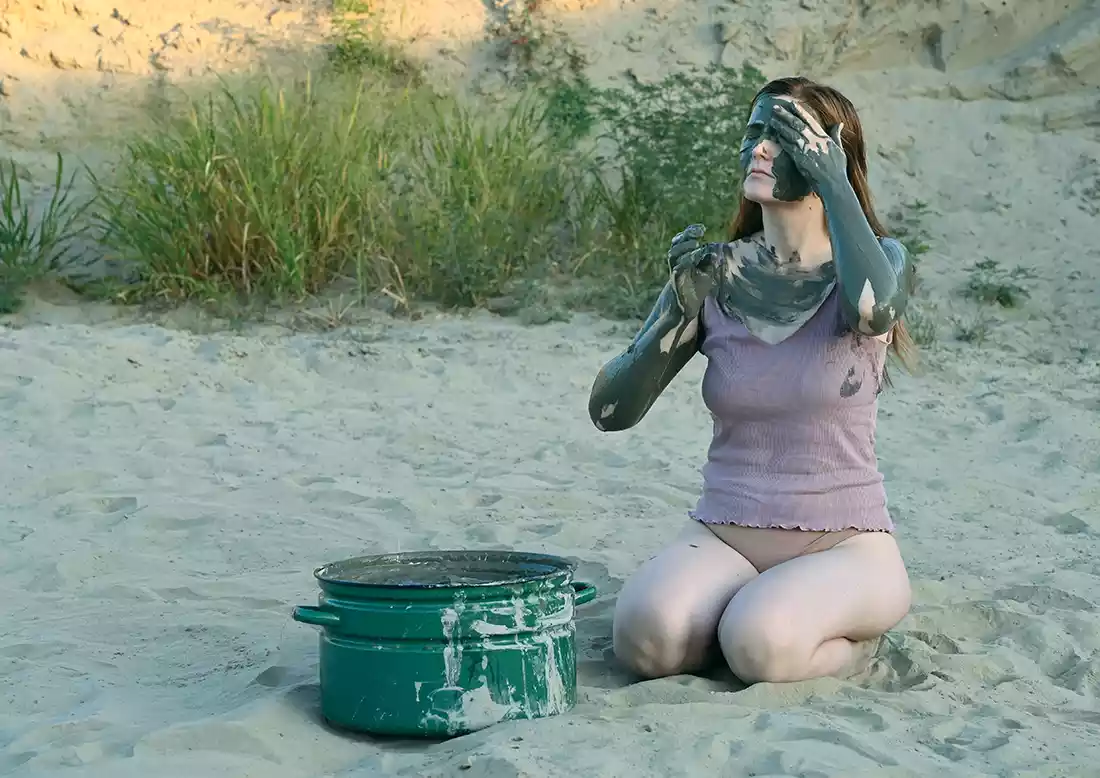
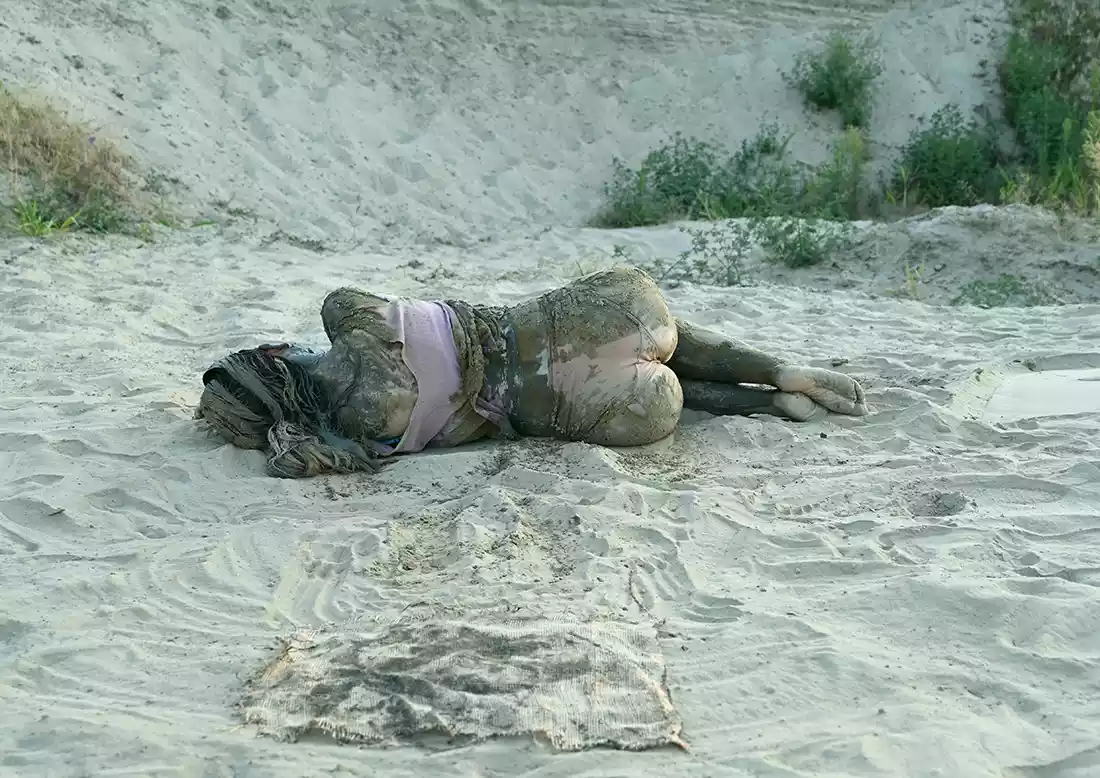
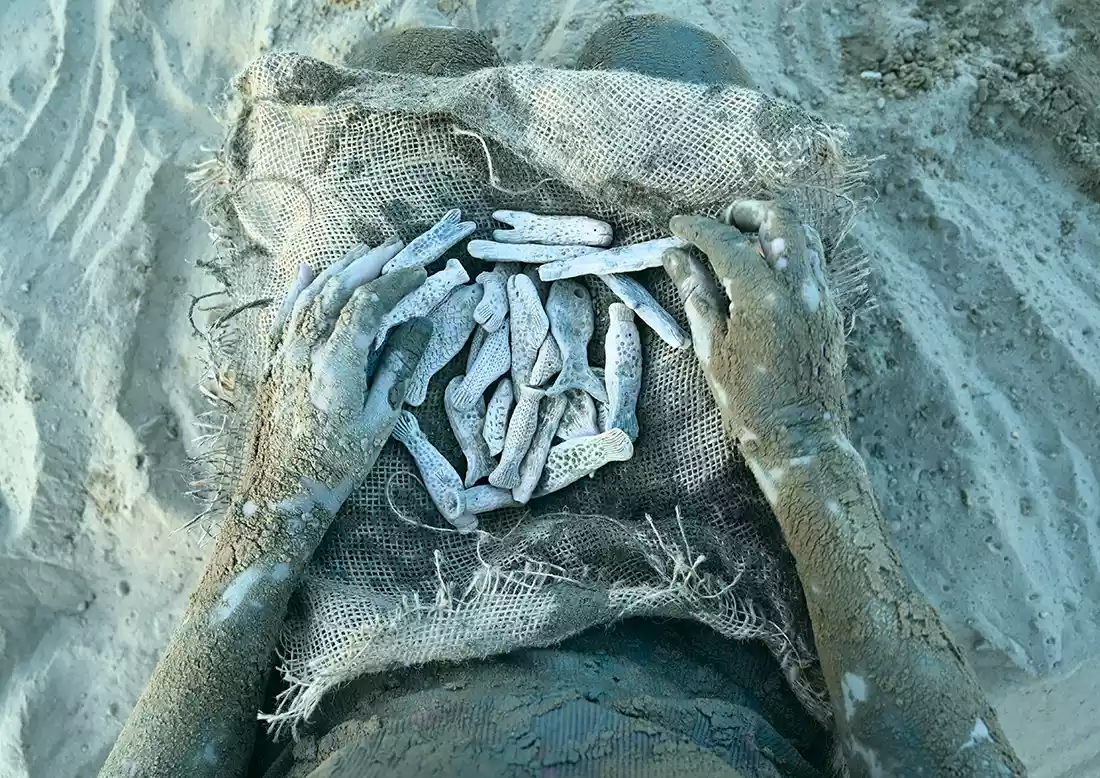
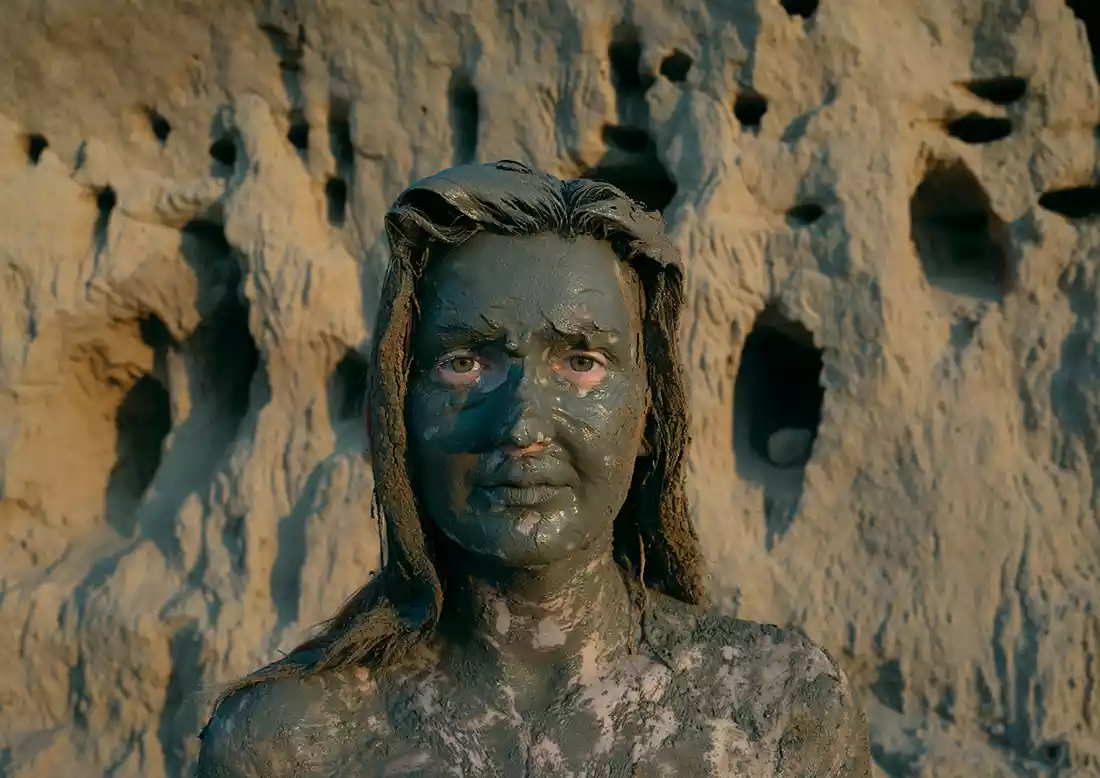
It is well known to the people of Helemba that according to one of the first mentions of their settlement, thirty-three fishermen from Helemba where given under the lordship of the provost of Dömös, whose tax – in exchange for their freedom – was thirty fish. The symbolic framework of the story is in the exchange of burdens to freedom: even with the cyclical nature of the gesture of a settlement, it can always be interpreted as a kind of closure, a fresh start. Locations and numbers are in personal significance for the creator – three, thirty, thirty-three – which serve as the basis of the performance, with which she simultaneously creates personal and social, historical and contemporary fields of interpretation. Shaped with clay and mud from Helemba and fired there on an open fire – thereby becoming alienated and ransomed – the thirty clay fish becomes the material manifestation of letting go, of moving on to the next cycle, and at the same time, they can be paralleled to living fish in the sense that they also carry mud within themselves during their lives. The location of the handover – the local sand mine – is also connected to this, where the handover, through the mud, becomes one with those handed over – the person who represents the handover becomes a living sculpture, while also creating the risk of getting stuck in the mud. Unfolding the piece of material used to transport the fish raises the question: what should we do with the phenomena that have become the past, which are now useless to us, but are still a part of us? Instead of burying the fish, sprinkling it with sand preserves the possibility of letting go as a reminder of the previous cycle: the mud and sand, as cleansing forces, also ensure safety for this process, so there is no need to completely bury the past before starting over: the living part remains, it just changes, moves apart.